auf wiedersehen, Berlin

Berlin Wall Memorial 082625 sm

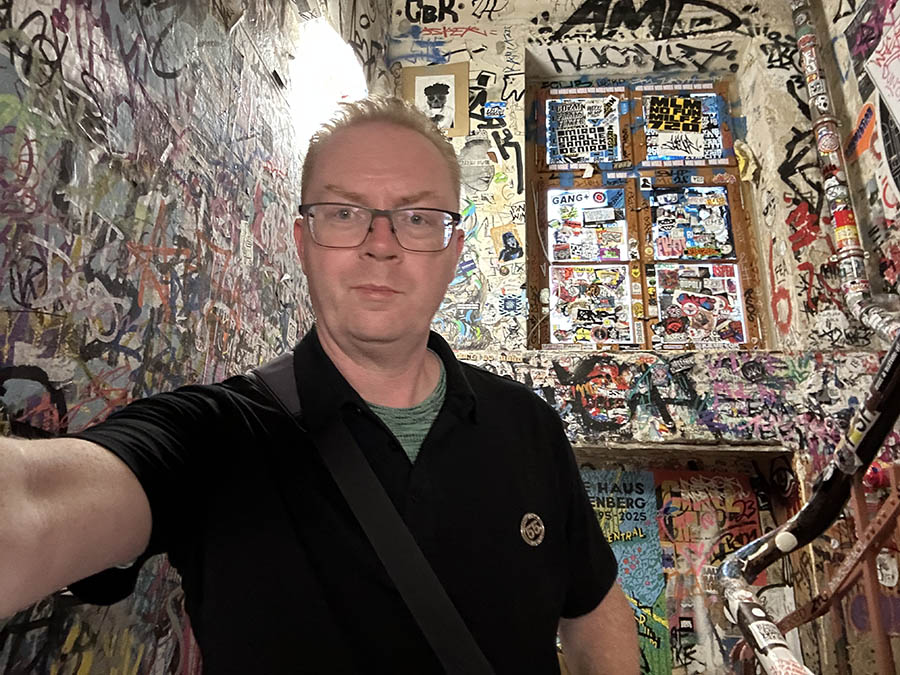
I’ll finish up with the remainder of my Berlin sketches and thoughts. I definitely had a lot of thoughts when visiting the Gedenkstätte Berliner Mauer (Berlin Wall Memorial) in the northern section of the city, close to the Nordbahnhof. before heading up there I walked over to the Hackescher Höfe, which I had visited a couple of days before with Omar. I wanted to visit the art and bookshop there, at the Haus Schwarzenberg, which is covered in graffiti and has a stairwell full of art and posters and stickers (and signs saying not to take photos; I broke that rule). The shop I visited was called ‘Neurotitan’ and was an incredible place, I bought some zines and stickers there, and asked the assistant if they had Detlef Surrey’s book ‘The Wall Revisited’ (I’m pleased to say I held a conversation in German and was totally fine; normally I need a couple of beers before the German comes flooding back). I had heard that this store stocked it, but she said that the last copy had just been sold that day, probably by someone else who had seen his talk in Poznan. I showed her my sketches of that talk, she said that I could probably get in touch with the publisher to get a copy (I did, once I got back to the US, but it took some time and a bit of extra money – thanks a lot, bloody tariffs – to get one sent over to America). I had that book on my mind now especially because I was going up to the Berlin Wall Memorial, which Detlef had talked about at length. I took the S-Bahn out to Nordbahnhof (I realize that sentence implies that I simply got on the S-Bahn, and just went to Nordbahnhof, but leaves out that I got on the wrong train in the wrong direction at least twice, like when you try to fix a scratch but end up smashing up the table, but I did end up at Nordbahnhof in probably more time than it would have taken to walk). The Berlin Wall Memorial is a preserved section of the Wall and the Death Strip, along Bernauer Strasse. It was already early evening when I arrived at Nordbahnhof (sketched below), which during the Cold War was closed down, a ‘Ghost Station’ on the divided S-Bahn system, where West Berlin trains would not stop but passengers would catch a glimpse of a time capsule manned with armed guards. I found the Berlin Wall Memorial chilling. This was not like the East Side Gallery, here was the Wall as it looked, along with rows of metal poles installed like bars you can walk through. One section remains closed off to give an idea of what the Death Strip really looked like. Berlin is a city that dares you not to forget its past. On a metal display in the middle of the grass are the names and faces of every person who was killed trying to escape from the East into West Berlin, 136 in all. The faces as they look out at you, some so young – even children – was frightening. There were blocks occasionally showing where people were shot trying to escape. The Wall was up from 13 August 1961 until 9 November 1989. I didn’t get to see all the areas of the Memorial, nor the documentation center, but I sketched the Wall as the light was fading, then took a tram out to Prenzlauerberg and back to the hotel.

Berlin Nordbahnhof 082625 sm

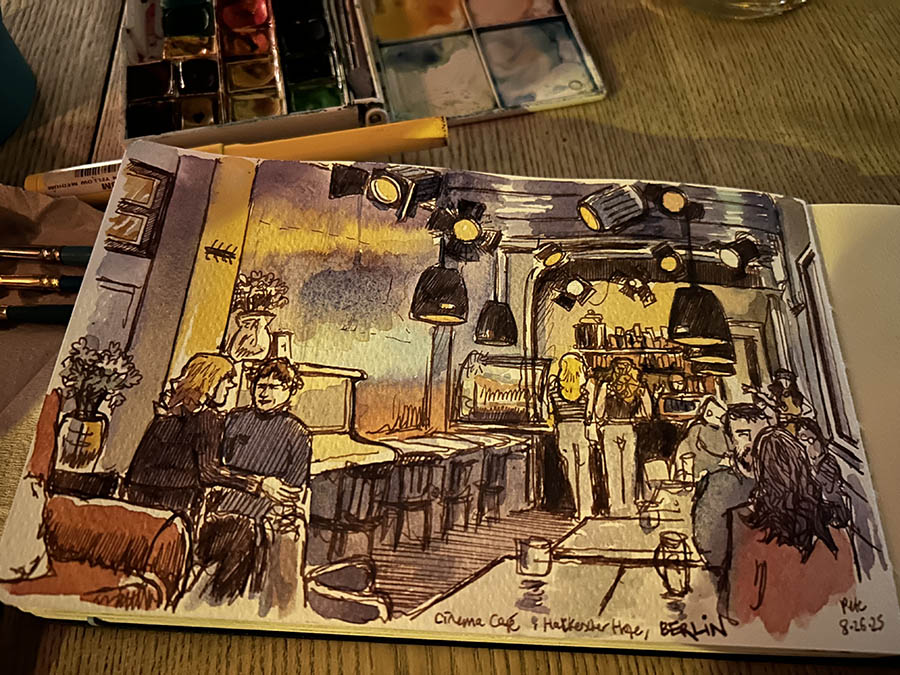
After a late dinner of spaetzle from the hotel restaurant I walked back over to Hackescher Markt. All over Berlin, but especially around here where there had once been a large Jewish population, you find the ‘Stolpersteine‘, or ‘stumbling stones’, which are actually little square brass plaques in the pavement that are slightly raised so that you might trip on them, by design. Each has the names of people who lived there previously, usually Jewish but many Roma, homosexuals, disabled, who were removed or forced to flee by the Nazis, along with the year, how old they were, and their fate (you see ‘Ermordert in Auschwitz’ a lot). This is an initiative by the artist Gunter Demnig started in the 90s, and has now spread to many other cities commemorating victims of the Holocaust. Each of the Stolpersteine is handmade. Berlin makes sure it does not forget. I went back over to Hackesche Höfe and had a beer at the Cinema Cafe, which I sketched in the poor light. It is interesting that a lot of places in Berlin are cash only, where I got so used to using my card everywhere in Poland, same back in California. It wasn’t a busy evening, it was Tuesday, but it was an interesting cafe to sketch, and I used my fountain pen. The outside area of the cafe is in that alley with all the graffiti and would have been an interesting sketch, if I could find somewhere to sit with a good view, which I couldn’t. After this, tired, I went to bed.
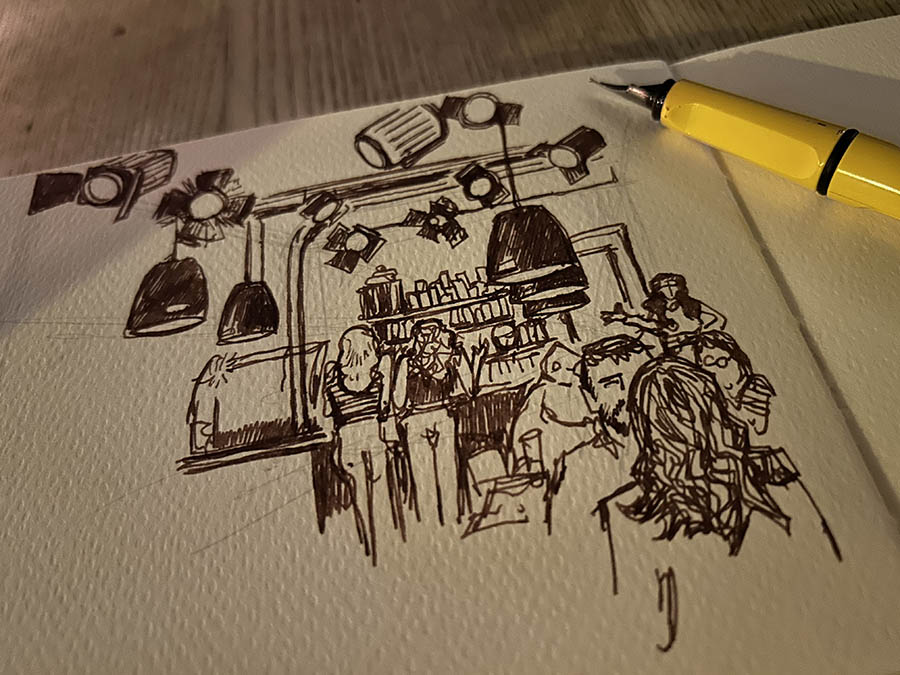
Berlin Cinema Cafe 082625 sm

On my last morning in Berlin, at the end of my Poland-Germany trip, I was ready to go back to London but had a last sketch or two in me. I had considered adding in a short trip to Denmark onto the end of this adventure, since it was 30 years since my strawberry-picking visit there, but decided a couple more days in London would be better for me. I had also considered taking the overnight train from Berlin to Brussels, a fairly new service, and passing a couple of days in my old Belgian haunts, but I’m glad I didn’t in the end. It was nice to spend some time by myself in Berlin but it’s not 1998 any more. I walked down to the Museum Island (sketching a man fishing in the Spree along the way) and sat next to the Dom, drawing the view of the Museums in pencil.

Berlin fisherman
Berlin Museuminsel skecth 082725 sm

It is fun (and quick) to draw in pencil but I don’t really like straight lines much. I do love that sky though, and miss those wispy cloud skies. Before long I was back up in the wispy clouds myself, and sketched the view on my very small plane (see below). It was easy to get the S-Bahn out to the Brandenburg airport, but took a very long time getting through the security line, which seemed to have one line per baggage inspector and the inspector seemed to have to open up every single bag and inspect every single thing. I eventually had to ask them to let me through as I would miss my flight despite being there super early. Word of warning for you in Berlin airport, it can be slow. I flew back into a new airport for me though, London City Airport out past Docklands, a very small and convenient place to end up. I jumped right onto the DLR to Bank, and onto the Northern Line back home to Burnt Oak. Auf Wiedersehen Berlin, it was nice to reconnect after all these years. I would like to get back to Germany again soon, but I’d like to go back to the South and West again, maybe explore the Rhine Valley at last.

BER-LCY 082725 sm

East Side

Berline East Side Gallery 082625 sm

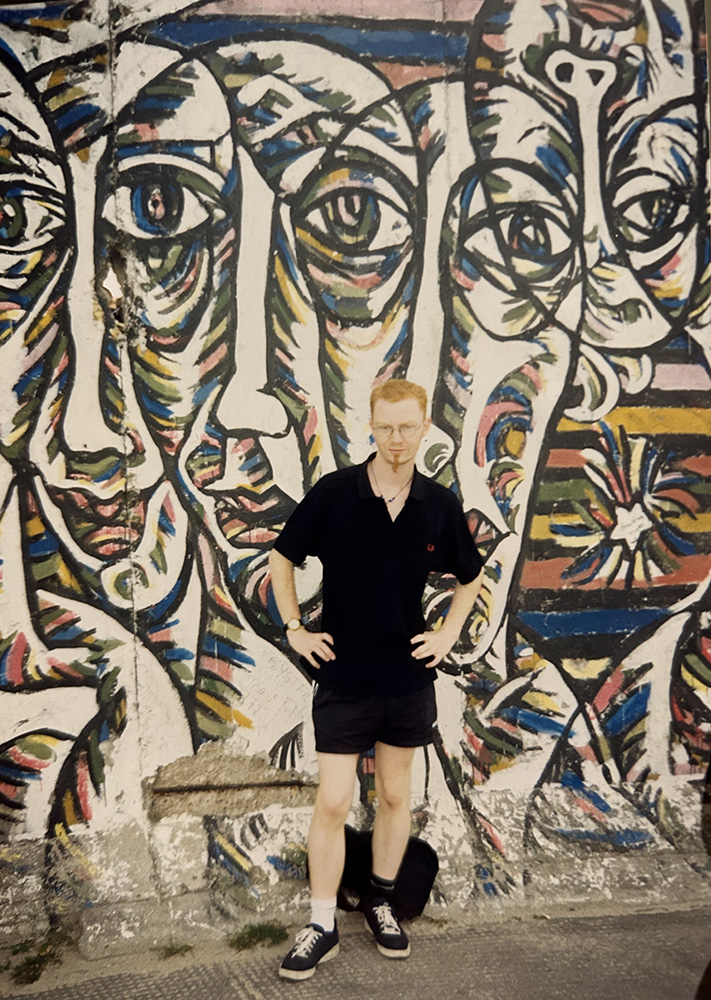
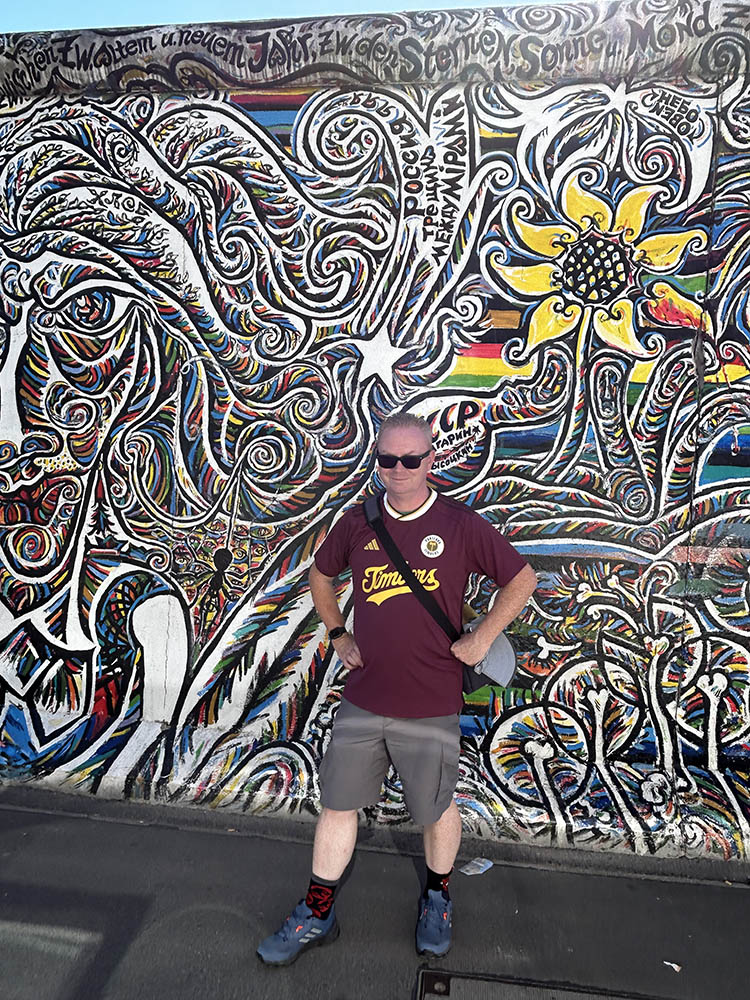
I took the U-Bahn out to Warschauer Straße, a wide busy road well out into the East, full of hostels and clubs and new buildings. I was headed to the East Side Gallery, a famous stretch of the remaining Berlin Wall that separates Mühlenstraße from the banks of the river Spree. Popular with tourists, I’ve been here before, but almost didn’t recognize the other side of the street, now all built up with tall steel and glass hotels and apartments and businesses, plus a big modern concert arena, not like the concrete DDR era blocks and empty spaces I saw on my last visit. The East Side Gallery starts close to the Oberbaumbrücke, a decorative bridge over the Spree, and is the longest bit of Berlin Wall left standing. It was covered in artwork by over a hundred artists in 1990 after the Wall fell, and has been left as a testament to the fall of the DDR. Some of the artwork has stayed in place over the years, much of it has been updated or renovated, or even had new artwork put in place. Some sections have even come down, as Berlin has started redeveloping, but this is considered to be the largest open-air gallery in the world and contains some now famous paintings such as the one of Brezhnev and Honecker kissing, My God, Help Me to Survive This Deadly Love by Russian painter Dmitri Vrubel. I stood and sketched the section above, showing Alles Offen (‘Anything Open’) by Rosemary Schinzler. I drew in pencil and watercolour (on that horrible bobbly Moleskine paper) and I likely had in mind the looser style of Detlef Surrey having been so inspired by his work at his talk. Plus it was just faster; I get bogged down with my penwork sometimes, and it’s good to be free; where better to be free than at the broken Berlin Wall. There were a lot of tourists about but it wasn’t crowded. I tried to find the spot where a photo of me was taken in 1998, and it was besides Wir Sind Ein Folk (‘We Are One People’ aka ‘Worlds People’) by Schamil Gimajew. I got someone to take a photo of me, so I could put them side by side. It’s clear that the original painting looks fairly different to the updated version, but still in that very distinctive style that I was so drawn to. The side by side photos are below. I remember we used a highly stylized black and white version of that photo in a poster for our small university production of Brecht’s Caucasian Chalk Circle (performed in German; I was Azdak the judge, the best possible character to play ever; that was a chaotic student production for our German Play course, in which I co-directed the first half, and designed the set to be projected on stage by one of those overhead projectors you get in schools, with extra characters drawn in pen and moved about alongside the real actors by me, it was very strange but we were on a budget and had to be creative…). Wir Sind Ein Folk is a really long piece and you could spend hours looking at all the details; there is more information about the piece and the artist on the East Side Gallery Exhibition website. Anyway here are the two photos, almost three decades apart (note the odd socks in the older one); I still stand in the same way.

After exploring the East Side Gallery I walked along the Spree, the Sun was out and I like to find the shade, so I stood next to a big boat (which was also a hostel; seemed like a fun place to stay, or maybe not, maybe 1998 Pete would have enjoyed it). I wanted to draw the long Oberbaumbrücke. I had intended to colour it in but couldn’t be bothered in the end. It is a double-decker bridge, and connects two neighbourhoods (Friedrichshain and Kreuzburg) that were divided by the Wall. This bridge was built in 1896, replacing an older wooden crossing, and has those two distinctive brick towers inspired by those in the city of Prenzlau. Updates were made following reunification. While I sketched, an American man started to chat with me, he was another sketcher who had been at the Symposium and was part of Urban Sketchers LA, Kevin Riley, really good sketcher, so now I’m following him on Instagram. It’s this whole thing about urban sketching, we get to recognize our people out in public, make connections.

Berlin Oberbaumbrucke 082325 sm

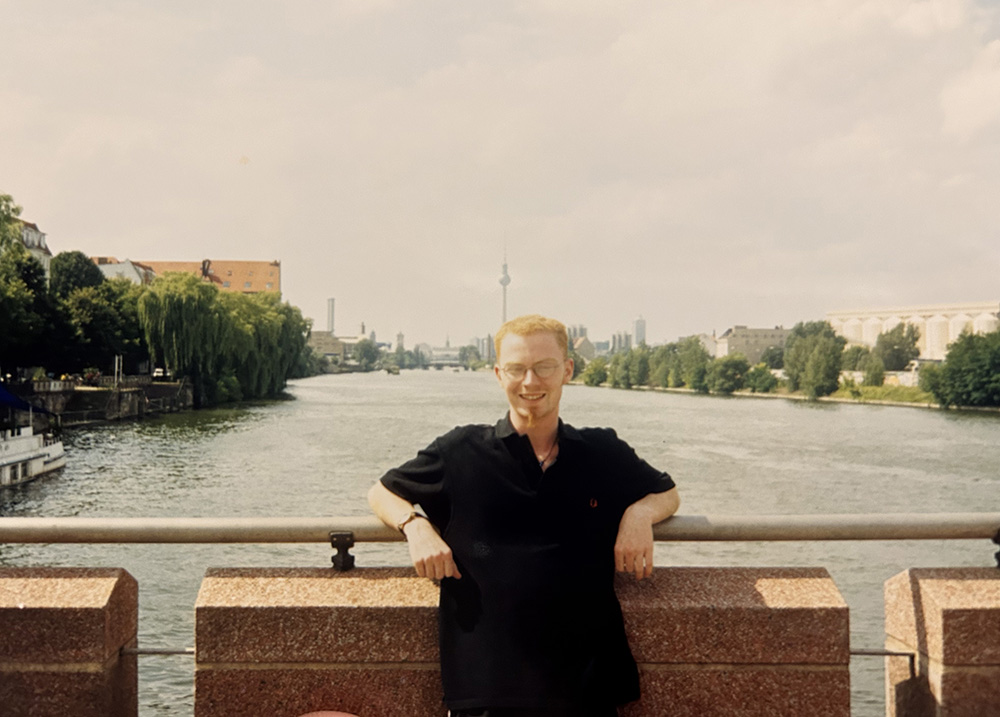
Here’s another picture of me in Berlin in 1998 standing on the Oberbaumbrücke, with the Fernsehturm in the background. I had thought about taking one of those riverboats down the Spree, that would have been interesting. Can’t do it all though. After I finished the sketch of the bridge, I walked back over to busy Warschauer Straße, had a fairly gross tasting vegetarian currywurst at the station, and headed back to the hotel for a rest before seeing some more remains of the Berlin Wall before it got dark.

Prenzlauerberg

Berlin Prenzlauerberg 082525 sm

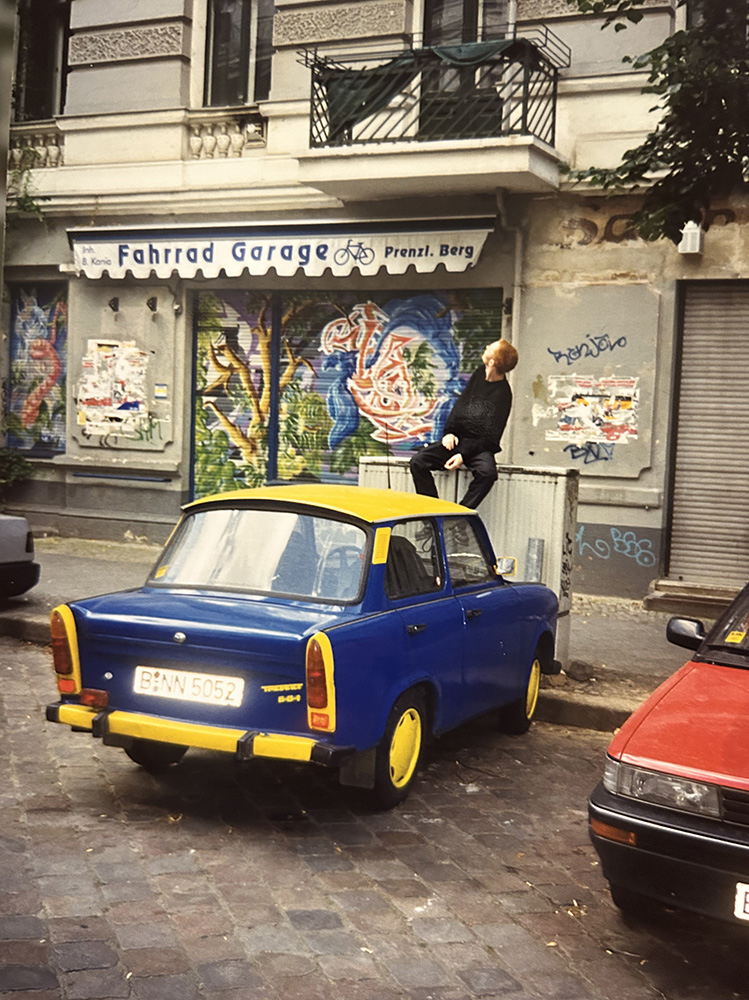
After a short rest at the hotel, I got back to exploring Berlin. I got on the U-Bahn at Rosa-Luxemburg-Platz and went a couple of stops up to Eberswalder Straße, a station above ground in the busy Prenzlauerberg district. I had struggled to remember exactly where I stayed on that trip to Berlin in 1998, just remembering that it was somewhere in East Berlin, where there was a busy intersection and an U-Bahn station above ground with some magnificent ironwork. I looked in my old journal from that trip – instead of bringing guidebooks that would weigh down my bag I simply got a notebook, filled it with information from each book, copies of maps and metro systems, and left space at the back to write a journal of the trip, five weeks around Europe on the trains. No smartphones in those days. I had kept a separate journal for more detailed and personal writing (lot of time to write on trains and in hostels) but in my main one I wrote down when I arrived and left, what I did, who I met and where I stayed. When I went to Berlin, it was not from an overnight train but a shorter journey from the pretty city of Lübeck where I had slept for a couple of nights at a hostel, and had met a couple of Australians called Pete and Kat who were also going to berlin the next day. We went together, and after arriving at Zoobahnhof we were right away being approached by people offering places to stay at hostels or otherwise. This it turns out was very normal especially in the Eastern European cities, and Berlin I suppose was the furthest East I’d been yet (in my life). An older woman called Frau Wurst (Mrs. Sausage) offered to rent us her small apartment for a few days, and being in our fearless early 20s we all said yeah why not. This was many years before the concept of AirBNB. She took us on a bus, getting angry with the ‘Wessis’ (who were very rudely just minding their own business and not bothering her at all) for sitting in the front seats upstairs, she was scolding and scowling at them, to their (and our) confusion. I learned that ‘Wessis’ were West Berliners and ‘Ossis’ were East Berliners, and Frau Wurst it seemed was no fan of a Wessi. Me and my two new friends who were both Aussies (not to confuse things) just looked at each other like, what have we got ourselves into here? Frau Wurst told us all about Berlin from the top of that bus, all in German that I translated for the two Australians as best I could, and especially about life following the fall of the Berlin Wall, and I learned about ‘Ostalgie’, the nostalgia for the life in the old DDR. It was an education. We ended up in the area which I now realize was Prenzlauerberg, and I wrote down the address in my little journal so that decades later I would remember where it was we stayed – Schliemannstraße. Frau Wurst told us how she had lived in the flat before the Wall fell, and then after German Reunification she suddenly had to start paying rent and had all these other unexpected living expenses, so she converted the flat to rent out to tourists and was making extra money that way during the summer. It was the 90s though, so instead of posting online she had to literally go to the station and talk to people getting off the train. She had a fascinating story and I’m really glad we met her and stayed up there, as it was an interesting and convenient place from where to explore Berlin, but it still felt like two cities with two vibes. Not so much any more. I walked around the neighbourhood, finding the street where I had stayed with two Australians all those years before. It was different, very busy, diverse, lots of cafes and shops, and I sat outside a fast food joint on the corner and sketched the view of the station while Berliners whizzed past on e-bikes.

Me and a Trabant in Prenzlauerberg in 1998

Berlin dragon fountain 082525 sm

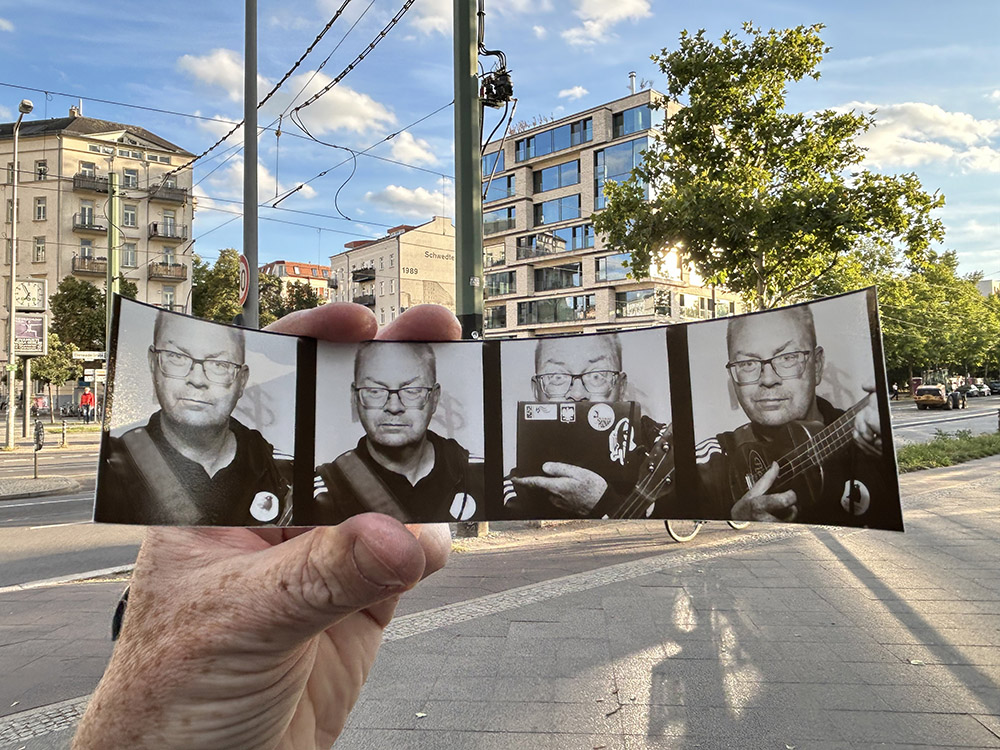
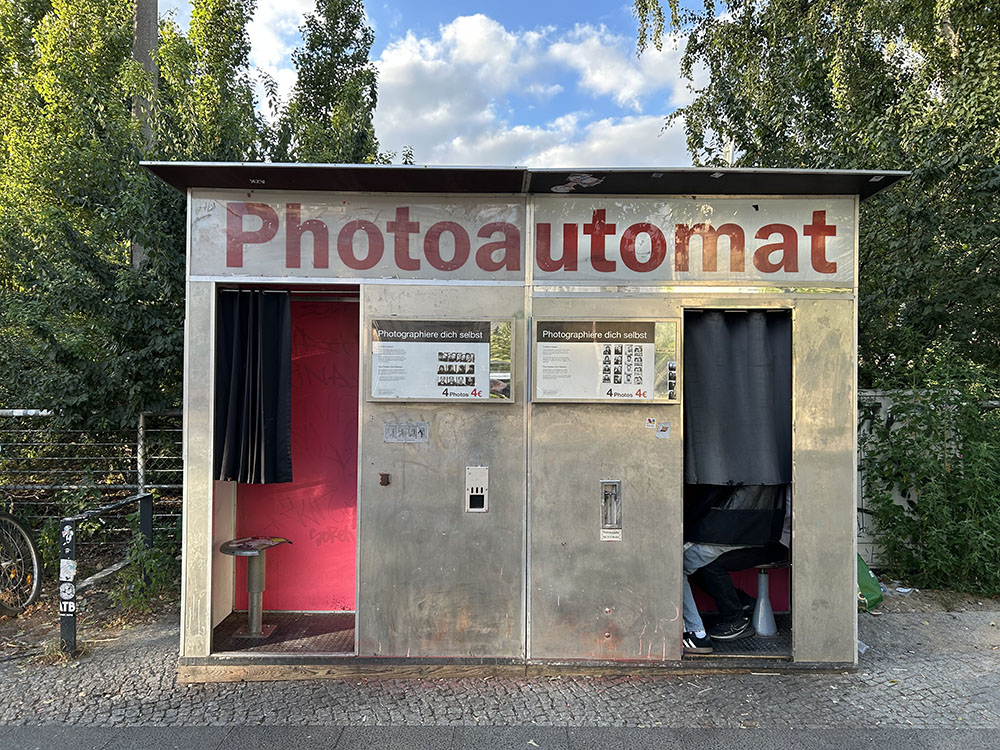
Everywhere I had read told me that Prenzlauerberg had gone very upmarket and was one of the trendier parts of Berlin, but I didn’t feel that so much. Buildings were covered in graffiti, which seemed more the norm in Berlin that other cities anyway and it added character, but it was scruffier than expected, but again I didn’t mind that. I walked to a little park that cuts across Schliemannstraße, where people were playing games, reading, talking, walking their dogs and in my case, sketching a big green metal water pump, which had a dragon’s head for a tap. I found a nice bookshop opposite the park and had a look around in there (no sign of Detlef Surrey’s book), and wandered about a little bit more before heading over to Mauerpark. I found one of those Photoautomats, the old-school instant photo booths found all over Berlin that all the hipsters want to find. I had to have a go (see below). In the first couple I didn’t realize it was even working properly, in the third I held up my sketchbook, and in the last one I held up my blue plastic ukulele that I’d brought along to play while sat in the park.

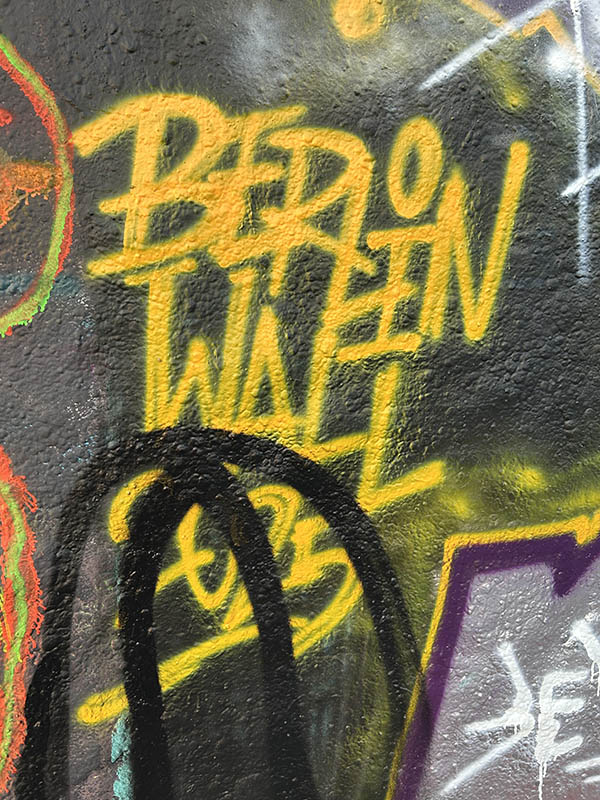
Mauerpark is a grassy space just a short walk from Eberswalder Straße. As the name suggests, it is a park next to what was a stretch of the Berlin Wall, and was part of the infamous ‘Death Strip’. These days it’s a lively park where they hold a flea market and regular open-air karaoke, but there are always people spraying new graffiti designs on the stretch of concrete on tope of the steep embankment. I sketched the wall and listened to a group of four teenage artists debate over what to paint and how, the familiar sound of cans being shaken and music being played over tinny speakers. One of the kids said that he could not be out too long as his mother had called him home for dinner. I found it fascinating watching the street artists at work, and I sketched that part of the wall before sitting on the steps strumming my ukulele as the sun started to go down. A pretty good evening in Berlin.

Berlin Mauerpark 082525 sm

Berlin Photoautomat sm

I took the tram back to Eberwalder Straße and walked about a little more, checking out the Kulturbrauerei (finding another little Photoautomat, above), before deciding to grab some groceries at the supermarket and head back to the hotel. It was dark by now, and I was hungry. I ended up going for a late dinner at the much more Bavarian Hofbräuhaus, near Alexanderplatz, where I had a hige liter-sized ‘Maß’ of Bavarian beer and some schnitzel, while listening to some Bavarian oom-pah music (not very Berlin but very fun), and trying not to overhear the conversation an Irish man was having with his date behind me, I say conversation, more like monologue. I tried to sketch it all in pencil, Monday night in Mitte. And then, home to bed.

Berlin Hofbrauhaus 082525 sm